

Do Dew Claws Need To Be Removed
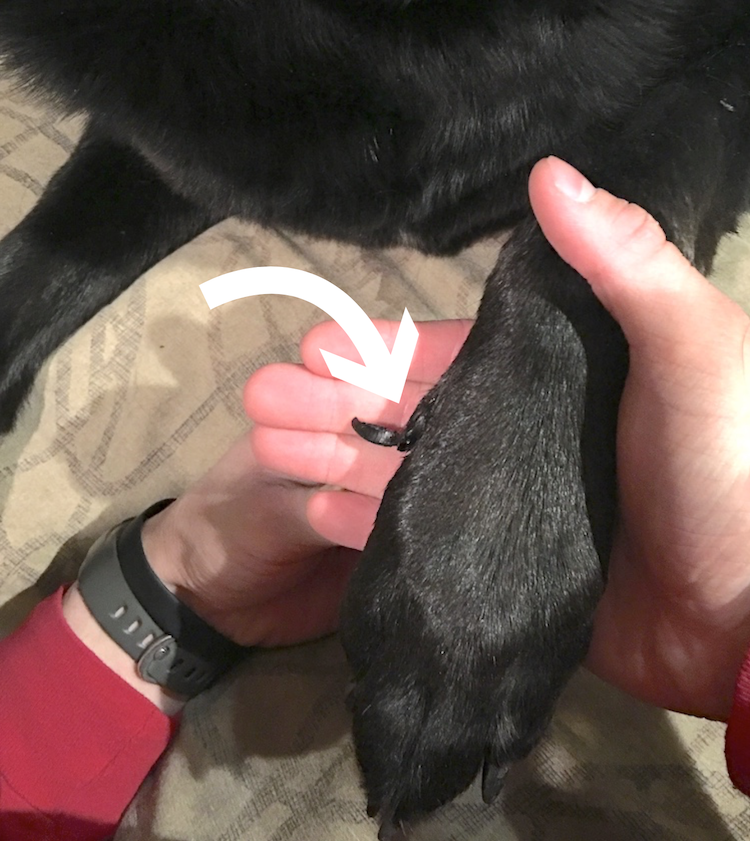
What is a dewclaw? It's that petty digit on your dog (or cat's) inner front leg, somewhat coordinating to our pollex.
Although dewclaws are nowhere near as helpful to a dog as a thumb is to a homo, they nevertheless have a purpose.
Some people think their dogs' dewclaws should exist removed. But dewclaw removal is necessary only in cases of severe injury or disease.
Why Is It Chosen a Dewclaw?
Recollect about grass with drops of dew on superlative: As a canis familiaris prances through the field, the claw college up on the leg catches the dew on the top of the blades of grass — thus the term "dewclaw."
Front and Rear Dewclaws
- Front dewclaws: All dogs are born with a dewclaw on each front leg.
- Rear dewclaws: Some dogs are born with 1, ii or even double dewclaws on the rear legs.
Rear dewclaws are considered an bibelot except in a few breeds where single or double well-developed rear dewclaws are part of the brood, such equally the Briard or Great Pyrenees. These should not be removed.

Do Dewclaws Have a Purpose?
Front dewclaws help dogs grasp things using their forelegs, such as a toy, ball or food. Although dogs can hold on to things without a dewclaw, the dewclaw is a helpful addition for grasping.
More than important, perhaps, dewclaws almost probable help stabilize the carpus (ankle):
- For agility dogs, leaving the dewclaw in place helps them with tight turns and most likely prevents arthritis in the carpal articulation as they age.
- The dewclaw actually does touch the ground in racing and coursing breeds when the dog makes tight turns.
- Rear dewclaws in climbing breeds such as the Saint Bernard and Peachy Pyrenees are thought to help them while climbing rough terrain.
By and large, all the same, when in that location is a dangly, floppy rear dewclaw, it serves no purpose. There is probably a do good to dewclaw removal in these cases since they can get caught and become injured.
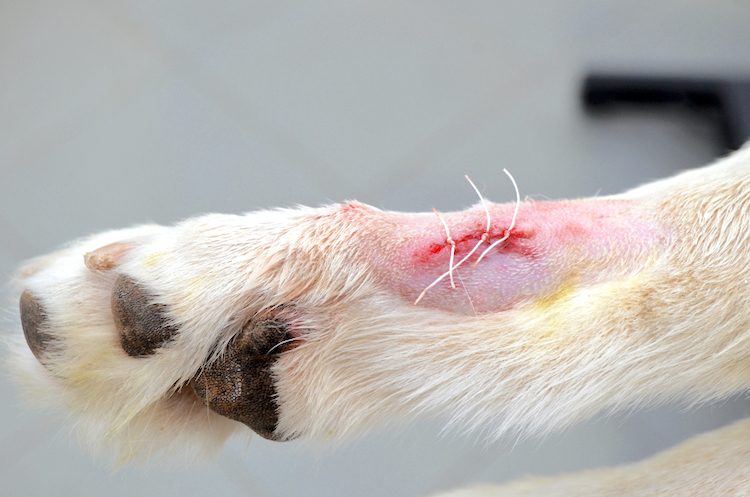
Should Dewclaws Exist Removed?
There is no valid medical reason for front dewclaw removal and fifty-fifty removal of well-developed rear dewclaws unless in that location's a diseased dewclaw or dewclaw injury.
Front dewclaws are a normal part of a dog'south anatomy. They are fastened to the carpus by a separate metacarpal bone, forming an actual joint with the carpus.
These front dewclaws accept their own nerve and blood supply, muscles and tendons, simply similar the iv toes that touch on the footing.
It became customary to testify certain breeds at canis familiaris shows with dewclaws removed, and this is where many people got the thought that dewclaws should be removed. It was also thought that hunting breeds may hurt their dewclaws while working, leading to removal.
In the past 10–xx years, withal, removing dewclaws has fallen out of favor with many veterinarians, although some breeders still prefer to have the dewclaws removed.
For many vets, it has go an ethical outcome:
- Why remove body parts unnecessarily?
- Why remove forepart dewclaws that most likely practice serve a purpose and rarely get injured?
For example, Dr. Emma Goodman Milne, BVSc, MRCVS, has lamented that vets "may feel under pressure to perform procedures they experience uncomfortable with purely because a customer says the law allows it." She said she "volition continue to exercise my correct non to perform whatever unnecessary mutilations whether the police force allows it or not."
Although the American Kennel Club (AKC) condones dewclaw removal in certain breeds, simply as information technology does tail docking and ear cropping, the group says no domestic dog volition be disqualified without these alterations:
"The American Kennel Society recognizes that ear cropping, tail docking, and dewclaw removal, as described in certain breed standards, are acceptable practices integral to defining and preserving the brood character and/or enhancing good health. Appropriate veterinary care should be provided.
AKC rules do prohibit changes in appearance 'except as specified in the standard for the breed.' If a brood standard provides for ear cropping, tail docking, or dewclaw removal, it is permitted. No AKC breed standard has a disqualification for any of these alterations."
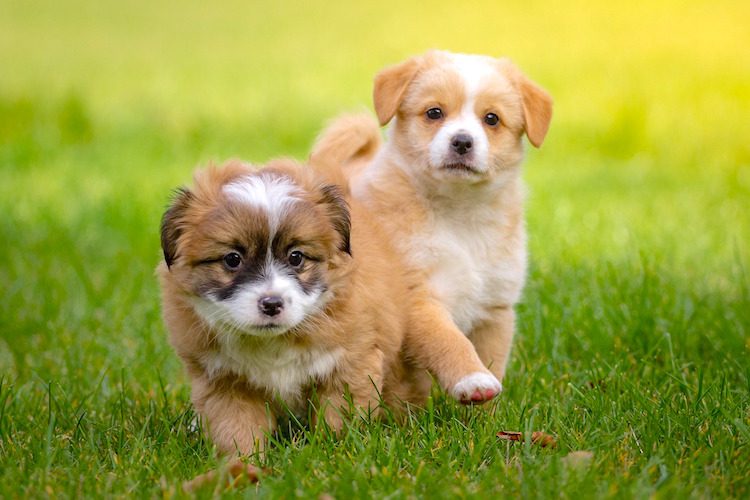
Front Dewclaw Removal
If dewclaw removal is to take place, this procedure should exist done by the fourth dimension the puppy is 3 days old.
Although information technology's a simple procedure — over in less than 1 minute — neonatal puppies feel pain, and dewclaw removal in a neonate is done without general anesthesia.
For those vets who still agree to remove dewclaws, many employ a local lidocaine injection to cake pain. Withal, the lidocaine injection hurts, the puppies still cry and feel some hurting.
Complications, such as infection or regrowth of the nail, are possible.
Some breeders perform dewclaw removal themselves. Vets usually accuse a puppy exam fee and a dewclaw removal fee for each puppy. Depending on the practice, this toll is effectually $30–$40 per puppy and upwards.
People sometimes ask, "Can you remove dewclaws on an older dog?" Dewclaw removal done at a afterwards age is a surgical process requiring general anesthesia.
Although there's no medical reason to remove normal forepart dewclaws on older puppies or dogs, some vets nevertheless concord to do this unnecessary surgery. If done at the same fourth dimension equally a spay or neuter, the dog undergoes but a single general anesthesia.
Rear Dewclaw Removal
If a dog is born with floppy rear dewclaws, these floppy dewclaws tin get ripped or injured more hands than well-adult ones.
Floppy dewclaws don't usually have much bony attachment to the tarsus (talocrural joint), so the dewclaw removal is fairly easy.
Nearly puppies aren't brought to a vet when they're 3 days quondam, then most puppies with rear dewclaws are older when the question of removing the dewclaws comes upward. If the puppy is brought in to be spayed or neutered, rear dewclaw removal can take identify at that time.
Behave in listen, all the same, that there is an additional accuse for the dewclaw removal, and the puppy may take bandages on the rear legs for vii–x days, as well equally an Elizabethan collar.
Recovery from dewclaw removal in an older dog can cause dogs and people more than headaches than recovery from the spay or neuter. It's not uncommon for dogs to chew at their bandages and dewclaw incisions, remove the sutures entirely, or get the incisions infected.
I've had to re-cast many dewclaw removal sites for an extra one–ii weeks, treat the dog with antibiotics at times, or actually anesthetize the dog again and re-suture if the domestic dog has self-traumatized the area.
The dewclaw removal cost varies greatly from vet to vet and pup to pup:
- The surgical fee volition be minimal if there'south only a small peel incision to remove a dangly lilliputian nail, or it will be more expensive if the dewclaw has a joint and must be disarticulated from the leg.
- Vets will charge a surgical fee and may add a accuse for local anesthesia, additional full general anesthesia and a bandaging fee.
- If at that place are complications with healing, of course there's a cost for that, as well.
Listen to this veterinarian speak about dogs' dewclaws and some potential risks in dewclaw removal:
Dewclaw Maintenance
Front end dewclaws rarely touch the ground and are usually a flake longer than the other 4 toes.
They require trimming every few weeks to every few months. Dogs generally don't mind a quick trim of these dewclaws as much as they mind you lot trimming their regular nails.
Rear dewclaws seem to cause more than bug. The conformation too as the bodily blast can exist abnormal, leading to a smash that may grow more speedily or is really closer to the pad, making it hard to trim.
People also simply tend to forget about rear dewclaws.
If a dog is continually coming to see me for problems with abnormal, hard-to-maintain dewclaws, I discuss dewclaw removal with the client.
Injured Dewclaws or Diseased Dewclaws
Ripped or injured toenails and digits are mutual in dogs.
You might be surprised that injuries are more common in the toes that touch the ground than in normal dewclaws.
Ingrown dewclaws can exist painful and lead to infection, by and large requiring a vet visit.
I trim back the boom, treat the wound, and dispense pain meds and antibiotics if necessary until the area where the nail grew into the pad or pare is healed. (This is a fairly mutual problem in some older cats as well.)
Smash bed infections or growths can occur that bear upon the dewclaw.
The treatment for an injured, diseased or ingrown dewclaw varies greatly from patient to patient. If handling of a dewclaw requires full general anesthesia or if the dog has presented multiple times for the same problem with a dewclaw, so dewclaw removal might be the humane selection.

At a Glance: When Is Dewclaw Removal Necessary?
| Scenario | Dewclaw Removal Necessary? |
|---|---|
| Canis familiaris has well-adult front end dewclaws. | No. Front dewclaws are normal in dogs. Trim them but equally you would other dog nails. |
| Dog has 1 or more well-developed rear declaws, but these are not usual for the breed. | No. Dewclaw removal is not necessary unless there'south a medical problem. |
| Dog has a ripped, injured or ingrown dewclaw. | Probably non. Run across your vet for treatment. |
| Dog has a declaw that is severely injured or keeps getting injured. | Perhaps. Encounter your vet for treatment. |
| Dog has a declaw that is infected or diseased. | Perhaps. See your vet for treatment. |
| Domestic dog has rear declaws that are abnormal and hard to maintain. | Maybe. Consult your vet. |
| Dog has a dangly, floppy rear dewclaw. | No … but perhaps helpful. Removal of floppy rear declaws may prevent futurity injury. Consult your vet. |

Final Thoughts on Dewclaw Removal
- Front end dewclaws are normal in dogs.
- Dewclaw removal is not called for unless there's a medical trouble.
- Get your dog used to having their dewclaws trimmed.
- Continue an eye on all of your dog'south nails — simply pay particular attending to dewclaws, both front and rear.
- Seek treatment for whatever injured nail.
Wishing you happy nails on happy trails!
References
- Coren, Stanley, PhD, DSc, FRSC. "Why Practise Dogs Take Dewclaws?" Psychology Today. October. 15, 2022. https://www.psychologytoday.com/the states/blog/canine-corner/201410/why-do-dogs-accept-dewclaws.
- "Conformation: Frequently Asked Questions." American Kennel Club. https://www.akc.org/sports/conformation/resources/faq/.
- Evans, Howard Due east., PhD, and Alexander de Lahunta, DVM, PhD. Miller's Anatomy of the Dog, 4th edition. Elsevier Wellness Sciences, 2022.
- Bojrab, M. Joseph, DVM, PhD. Electric current Techniques in Small-scale Creature Surgery. Lippincott, 2022.
- Milne, Emma Goodman, BVSc, MRCVS. "Removal of the Dewclaws of Dogs." Veterinary Record 162 (June 28, 2008): 868. https://veterinaryrecord.bmj.com/content/162/26/868.2.
- "Why Is the RSPCA Opposed to the Tail Docking of Dogs?" RSPCA. Aug. 23, 2022. Archived at https://spider web.archive.org/web/20180414145556/http://kb.rspca.org.au/Why-is-the-RSPCA-opposed-to-the-tail-docking-of-dogs_135.html.
 This pet wellness content was written past a veterinarian, Dr. Debora Lichtenberg, VMD. Information technology was final reviewed Jan. 8, 2022.
If you take questions or concerns, call your vet, who is best equipped to ensure the health and well-being of your pet. This article is for informational purposes only and is not a substitute for professional medical advice, diagnosis or handling. See additional data.

Do Dew Claws Need To Be Removed,
Source: https://www.petful.com/pet-health/dewclaw-removal-dogs/
Posted by: delongtusess.blogspot.com
0 Response to "Do Dew Claws Need To Be Removed"
Post a Comment